01
AI Tools
Discover practical AI tools for productivity, creativity, research, coding, and everyday workflows — with honest reviews and hands-on walkthroughs.
Explore AI ToolsLearn AI tools, prompts, automation, and emerging technology trends with step-by-step tutorials and expert guides.
Explore
Stay informed and build real skills with guides covering AI tools, prompt engineering, automation, AI agents, software development, and the technology trends shaping what comes next.
Discover practical AI tools for productivity, creativity, research, coding, and everyday workflows — with honest reviews and hands-on walkthroughs.
Explore AI ToolsLearn how to write better prompts for ChatGPT and other generative models, with reusable techniques, worked examples, and ready-to-use templates.
Explore PromptsFollow step-by-step guides for AI tools, automation, AI agents, APIs, and coding workflows that take you from an idea to a working result.
Explore TutorialsKeep up with new models, product launches, research milestones, and the industry shifts shaping how people build and work.
Explore TrendsArtificial intelligence is changing how people work, create, code, and learn. TechnoSAi brings together practical guides and clear explanations so you can understand these systems and actually use them — not just read about them.
From choosing the right tools and sharpening your prompting, to building agents, automating routine work, and following where the field is heading, everything here is written to move you from understanding an idea to putting it into practice.
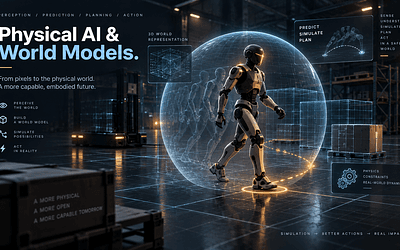
AI is stepping out of the chat window and into the physical world. This guide explores Physical AI and world models like Nvidia Cosmos 3 — trained on video, action, and sensor data — powering humanoid robots, warehouse automation, and self-driving systems. Discover why embodied AI is 2026's fastest-growing research frontier.
Read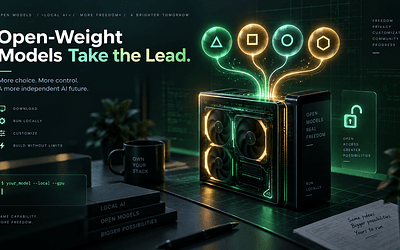
Open-weight models just closed the gap with frontier AI. This guide compares Qwen3.8, GLM-5.3, Kimi K3, and Meta's Muse Glimmer on performance, licensing, and hardware needs — plus step-by-step setup instructions to run them privately on consumer GPUs, from a single RTX 4090 to multi-GPU rigs.
Read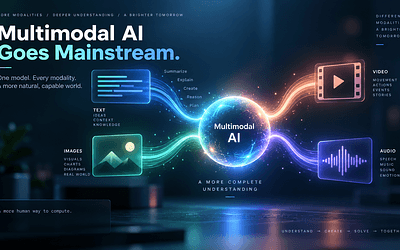
Text-only AI is over. In 2026, Gemini, Claude, and Qwen natively process text, images, video, and audio in a single model pass. This guide breaks down how each handles mixed media differently, plus real enterprise use cases in content creation, analysis, and search you can apply today.
Read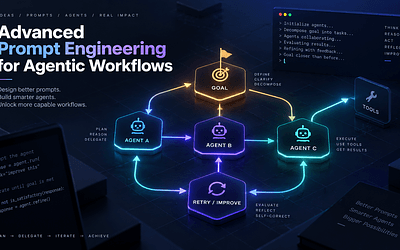
Basic prompting won't cut it for autonomous agents. This guide covers advanced prompt engineering for agentic workflows — goal-oriented prompting, tool-use instructions, self-correction loops, and multi-agent orchestration — with ready-to-copy prompt templates to make your AI agents reliable, consistent, and production-ready.
Read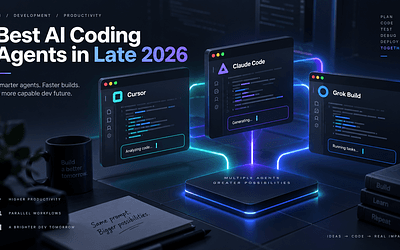
Which AI coding agent actually deserves a seat on your team in late 2026? We break down Cursor, Claude Code, and Grok Build — plus rising contenders — comparing parallel agents, terminal-native workflows, and long-running task handling. A practical, hands-on guide for developers choosing their daily coding stack.
Read
According to a recent Forbes report, technical skills are becoming outdated within just 5 years in today’s fast-changing AI-driven world. The key to surviving the future job market lies not in tools, but in uniquely human skills.
Read
OpenAI has identified a security issue linked to a third-party developer tool affecting its macOS app certification process. The company confirmed no user data or systems were compromised and is urging users to update their apps to avoid potential risks.
Read
AI agents are rapidly becoming the next big shift in artificial intelligence, enabling automation of complex workflows. Discover how they work and their impact on industries.
Read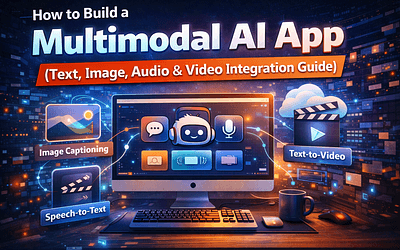
The most capable AI applications being built today do not accept just one type of input. They listen to voice, read documents, analyze images, and process video, all within a single unified interface. Building a multimodal AI app used to require stitching together a fragile collection of specialized services with no common architecture. That is no longer the case. Modern APIs and open-source models have made it practical for a single developer to build a cross-modal AI system that handles text, image, audio, and video in a production-ready application.
Read